

In January, Sarah and I came home one night from dinner excited to settle in and watch a movie. Sarah went straight into the family room to queue up Netflix and I grabbed the dog to do a quick walk. Before I could get outside, I heard Sarah yell “Kevin!!!” The shriek stopped me in my tracks. I walked into the family room and found Sarah looking up at an enormous bubble that had formed on the ceiling: water was flowing into the house.
It turned out that a roof-high ice column had formed on the outside of the house, making its way up under the vinyl. As pockets of warm air from inside made their way out, it melted the ice. The water had nowhere to go but inside. Now, it was raining in our just-finished family room and kitchen. I popped the bubble, cut open the ceiling, and sat devastated watching such a huge setback unfold right in front of our eyes. I spent the next couple of weeks demoing the room, breaking up ice, and installing heat cables to get us through the rest of winter.

Tearing the almost-finished family room apart the night we discovered water coming through the siding.
In those few weeks we also learned of some exciting news—we were pregnant with a baby arriving in November!
The time to do the siding was now. While a major project and somewhat unexpected, I think deep-down we were relieved at the idea of finally getting rid of the vinyl, which beyond the leakiness and performance issues, was getting tired and lacked the character and feel a 1904 home like ours should have. At nearly 30 years old, the vinyl was showing its age:


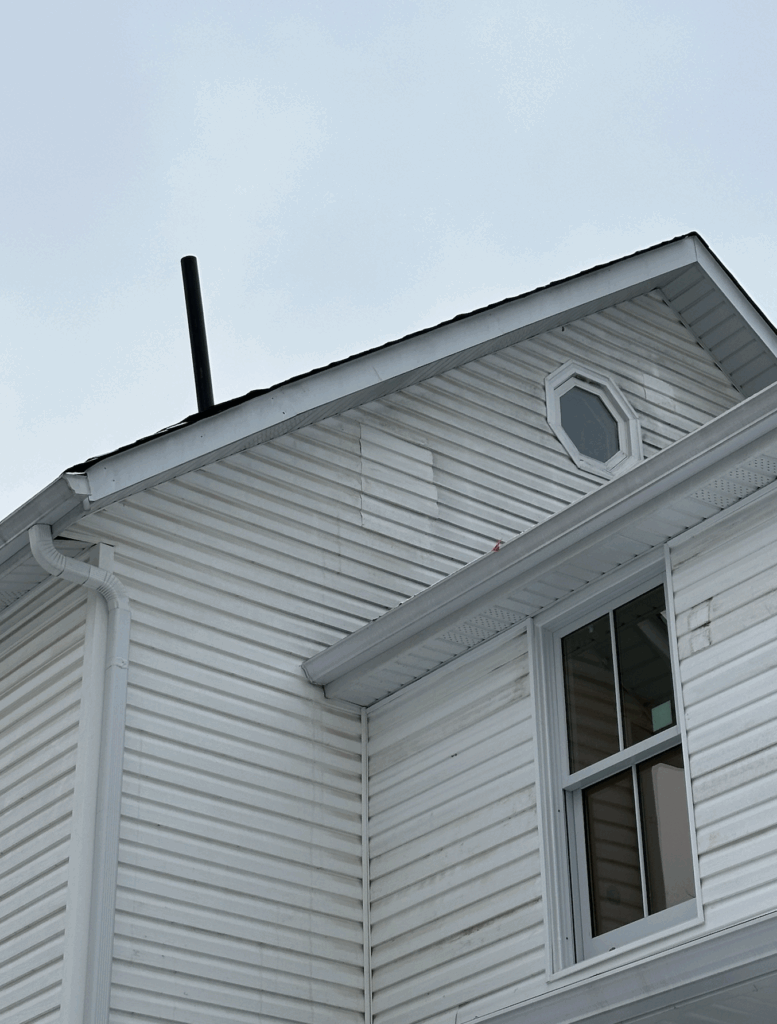
Vinyl is final, eh?
During our work in 2023 to restore the front porch, I had uncovered a part of the house that still had original 1904 wood siding on it, perfectly preserved within a wall. It was beautiful! And there was no doubt this is the look and feel (perhaps with a slightly different colour) we wanted to bring back.

The original 1904 siding we discovered while restoring the porch.

The house as it stood in 1908, just 4 years after being built. Imagining what it was like with its original wood siding was the inspiration we needed to bring that look back!
Our Siding Wishlist
Sarah and I talked about the siding project as a way to accomplish a few things:
- Make the house watertight and well-sealed again
- Recreate authentic historic details using appropriate materials and proportions
- Have a more sustainable, repairable, and maintainable siding material
- Introduce a softer colour palette than the stark white of the vinyl
- Create visual distinction between the 1904 structure and the 2000s addition
- Complete everything before our new arrival in November!
The Material Search
The big choice, of course, was the siding material we would use. Boy, did we go down some rabbit holes. I’ll first cover the materials we ruled out and why:
Fiber Cement: While durable, it fell short on multiple fronts. The profiles just weren’t right—fiber cement only comes in thin lap siding, not the cove profile that matches our original 1889 siding or in thick bevelled profiles like traditional siding planks would have originally. The material shows joints and gaps from a distance. Plus, it’s heavy, brittle, difficult to repair, and contains silica dust that poses health concerns during cutting and installation. For a house where authentic details matter, it wasn’t going to work.
Vinyl: Going back to vinyl felt like taking a step backward. We’re actively trying to reduce plastics in our home, and vinyl siding—even when it contains recycled content—essentially becomes landfill waste at end of life. Aesthetically, it was our least favorite option, requiring J-trim and aluminum capping that would never match the clean lines of historic woodwork. While lots of people praise vinyl products like siding and windows as being “no maintenance,” one of the things we’ve learned is that they effectively can’t be maintained. You can’t cut, screw, patch, and repair vinyl like you can, say, wood.
Cedar: Natural cedar seemed promising at first. We had found a mill to produce the profile we wanted, but the logistics quickly became a nightmare. Going from milled lumber to re-sided house takes a LOT of work. Wood siding holds up beautifully when it is primed and painted properly on all sides, but finding facilities to coat 9,000 linear feet of material proved nearly impossible, prohibitively expensive, and time consuming. I was going to have to freight material from a mill in British Columbia to a paint facility in Toronto, have it coated there over 3 to 5 weeks, and then have it freighted to our house. With our timeline, that was a dealbreaker. Additionally, I was quickly learning that coating is everything when it comes to wood siding performance and warranties. That was a lot to take on.
When you start getting into these options, the information is dizzying. Contractors are pushing one material, marketing materials promise the world, and people rely on outdated notions or anecdotes about what makes for good siding.
I, for example, thought fiber cement siding was going to be ‘it’ at the outset. Contractors raved about the no maintenance. Marketing materials looks beautiful. It was recycled! It was so easy to be seduced by these things. But as I dug deeper, I liked it less and less for all the reasons shared above.
So, in addition to my own reading, I reached out to architects whose residential work I had long-admired. Their responses validated what I knew deep down. Here’s one quote I got back in an email:
“If you want a serious, crisp and traditional look NEVER use synthetics. Fiber cement is crap and you can see the seams a mile away. You need a true wood siding product.
In terms of using quality wood outside, after having spent a good deal of my life building in the Northeast in very cold weather climates, wood and other natural materials get a bad rap because contractors are always seeking less expensive and easier to work with materials than something that requires skill and execution to look pristine. At the end of the day, there are certain things in the world that cannot be improved on such as using real wood for your siding.
The truth is that real wood siding is very hard to duplicate no matter what you do and so it’s almost always the right move.”
This perspective from someone whose work I deeply respect—and who lives in an even harsher climate than ours—gave me the conviction I needed to look seriously at wood options again. Which led us to Maibec.
Discovering Maibec
When we discovered Maibec, everything clicked into place.
The authenticity factor sealed the deal. Maibec offers genuine wood siding with the exact depths, profiles, and trims needed to recreate our historic shadow lines. Their 1×6 Cove option is virtually identical to our original 1904 siding. And we love that it’s Canadian-made, something surprisingly hard to find in other quality options.
The factory coating system offers peace of mind we couldn’t get elsewhere: 50 years protection against wood decay and 15 years on the finish coat. To put that in perspective, our vinyl siding (which is marketed as lasting virtually forever, was reaching end of life at 25 years…). Heritage experts I talked to touted Maibec as a no-brainer when original siding cannot be restored.
They also provided custom colour matching to achieve exactly the soft white shade we envisioned (more on that below!). No weeks of waiting for paint to dry, no project managing raw wood across the country to paint facilities—just beautiful, protected wood siding ready to install.
Busting Wood Siding Myths
It’s been insightful to hear all the responses from people when we tell them we’re going wood siding—many of which turned out to be outdated or simply wrong. So before we get into our design choices, I think it’s important to bust the two biggest myths:
“Wood siding rots and needs constant maintenance” Not with proper coating, and certainly not with well-done factory finishes. Maibec’s 50-year warranty against wood decay and 15-years on finishes is possible because it’s backed by coating products and processes applied in a controlled environment. These options simply didn’t exist when your grandparents were painting their clapboard every few years.
“Wood isn’t as eco-friendly as recycled materials.” In reality, wood is one of the most sustainable siding options available. It’s renewable, biodegradable, and has a much lower carbon footprint than petroleum-based products like vinyl or the energy-intensive manufacturing of fiber cement. Maibec sources from responsibly managed forests in Canada, making it a clear environmental win. Wood can also easily be maintained and restored.
For us, the proof was in the pudding. When you look at beautifully-designed houses that have stood the test of time, quality wood installed with craftsmanship and good coatings still look beautiful. We took inspiration from architects like Patrick Ahearn, Ferret and Hound, and from our travels through Maine and the rest of New England where ocean-side clapboard is a staple.

A project by Ferret & Hound, who consistently use cedar clapboard siding in climates even harsher than ours.

A Patrick Ahearn designed restoration. While not Victorian, the house has many of the same attributes and features of ours – and is clad in genuine wood siding.
Our Profile and Colour Picks
A few weeks ago, all our Maibec siding arrived and demo is underway!

10,000 linear feet of siding coming in hot!
Curious to see where we landed on profile and colour? Here’s a quick preview (and we’ll be sharing more in Instagram stories and our next blog post):
For colour, we’re softening the white look to head in a creamier, warmer white. That’s Benjamin Moore White Dove.
For the 1904 part of the house, Maibec’s 1×6 Cove is a near-identical match to the original siding! And for the addition (built later in 2000/2005), cedar shingles. Here’s what our colour-approved samples look like.

1×6 cove (shown on left) and cedar shingles will keep the house coherent and period appropriate, while also giving some distinction between old and new structures.

The 1904 part of the house, right of the yellow line, will get 1×6 cove siding just like the original. The 2005 part of the house, left, will be clad in cedar shingles painted the same colour.
What’s ahead in the next few weeks!
As we prepare for our new arrival, we’re thrilled to be restoring our home with materials that honour its history while meeting modern performance standards. The genuine wood siding will help us achieve every goal on our list: authentic details, weather protection, our dream colour palette, and clear definition between old and new—all (hopefully!) completed in time to bring baby home to a properly protected and beautiful home. One of baby’s first bedtime stories may just be this blog post to get them caught up!
In the meantime, we’re sketching out all the little details, like window trim specifications, drip cap profiles, soffit materials, etc.

Early phases of capturing all the details we wanted to bring to life in trim, colour, and profiles!
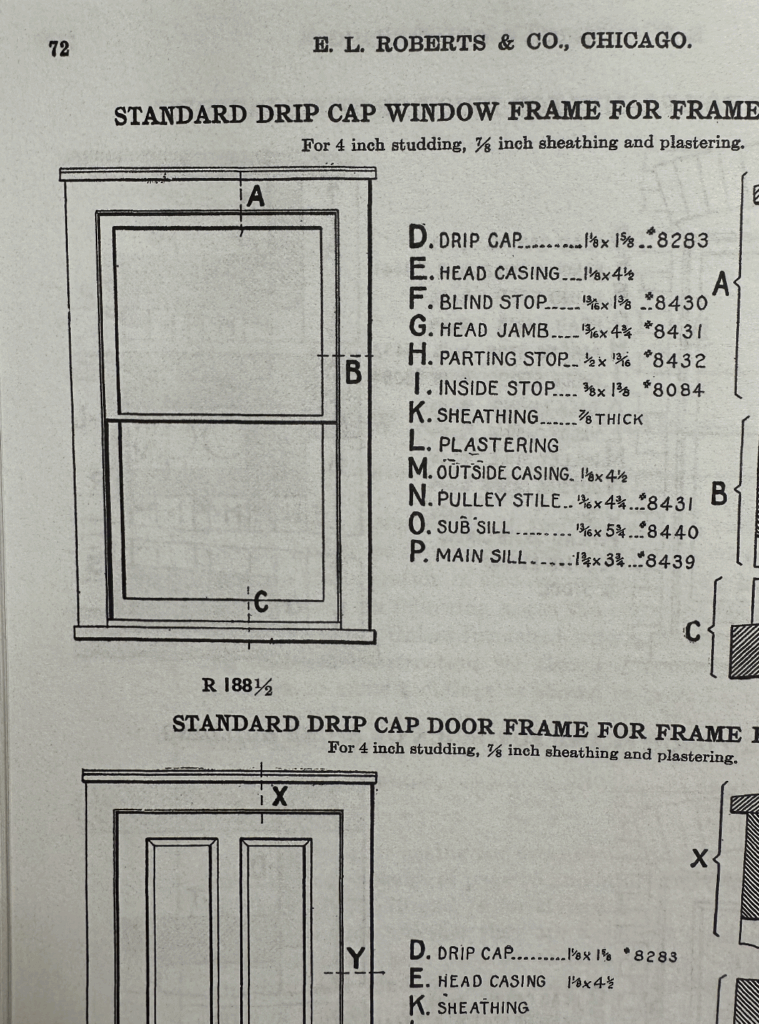
As always, we reference historical catalogues to make sure we’re headed on the right track – especially when there aren’t original details left to replicate. Our window trims will match standard available window trim profiles from the late 1800s, including drip caps, sills, casing, and headers.
After the stress of water damage and failing vinyl, choosing Maibec feels like we’re investing in our home’s future with materials that align with our values of Canadian craftsmanship, sustainability, and historic accuracy. Here we go! Stay tuned as we share our progress along the way, including in tons of Instagram stories.
—-
Disclaimer: This post is sponsored by Maibec, but all opinions are entirely our own. Our research and selection of Maibec occurred before our collaboration began.


+ show Comments
- Hide Comments
add a comment